By November, most gardens have quietly let go of the season. Borders that felt full and generous in July have thinned to seed heads and bare stems, and the last of the autumn colour has settled on the lawn. It is a moment many of us find a little deflating, as though the garden has simply stopped.
Yet this is precisely when good winter garden structure comes into its own. With foliage gone, the permanent elements of a garden are fully exposed: the lines of trellis along a boundary, the frame of a pergola over a terrace, the upright form of an obelisk in a border. These are the pieces that carry a garden through its dormant months, and they decide whether it feels considered or simply empty.
Let us explore how structure does the heavy lifting once planting has died back, and how to make the most of it.

What remains when the flowers have gone
Summer planting is generous enough to hide almost anything. A slightly awkward boundary, an unresolved corner or a terrace with no real sense of enclosure can all pass unnoticed behind a wall of foliage. Winter removes that cover.
This is not a problem to be solved, but an opportunity to see the garden as it truly is. The bones are revealed, and in a well-structured garden they are often at their most beautiful in the low light of a November afternoon.
Permanent structure gives a winter garden a clear outline from the house, a sense of shelter and enclosure, and height where planting has collapsed. It also supplies the focal points that draw the eye through the space when there is little else to look at.
Winter garden structure as a design tool
Garden designers tend to rely on three quiet tools to shape how a garden reads in winter. None of them depends on a single flower.
Silhouette
Against a pale winter sky, outline matters more than detail. The crisp edge of a pergola beam, the tapering point of an obelisk or the regular grid of a trellis panel all become graphic shapes. Frost and low sun sharpen them further, picking out every line.
Repetition
Repeating a form or material across the garden creates rhythm. A pair of obelisks flanking a path, a run of matching panels along a boundary, or the same timber finish carried from screen to planter gives the eye something steady to follow. When planting no longer supplies that rhythm, repetition holds the composition together.
Framing
Structure can frame a view as deliberately as a window does. A pergola or arch draws attention to whatever sits beyond it, whether a bench, a specimen tree or simply a glimpse of the next part of the garden. Framing gives a dormant garden a sense of purpose, because it tells you where to look.

Trellis panels that hold a boundary together
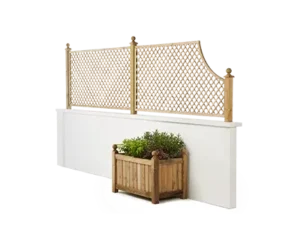
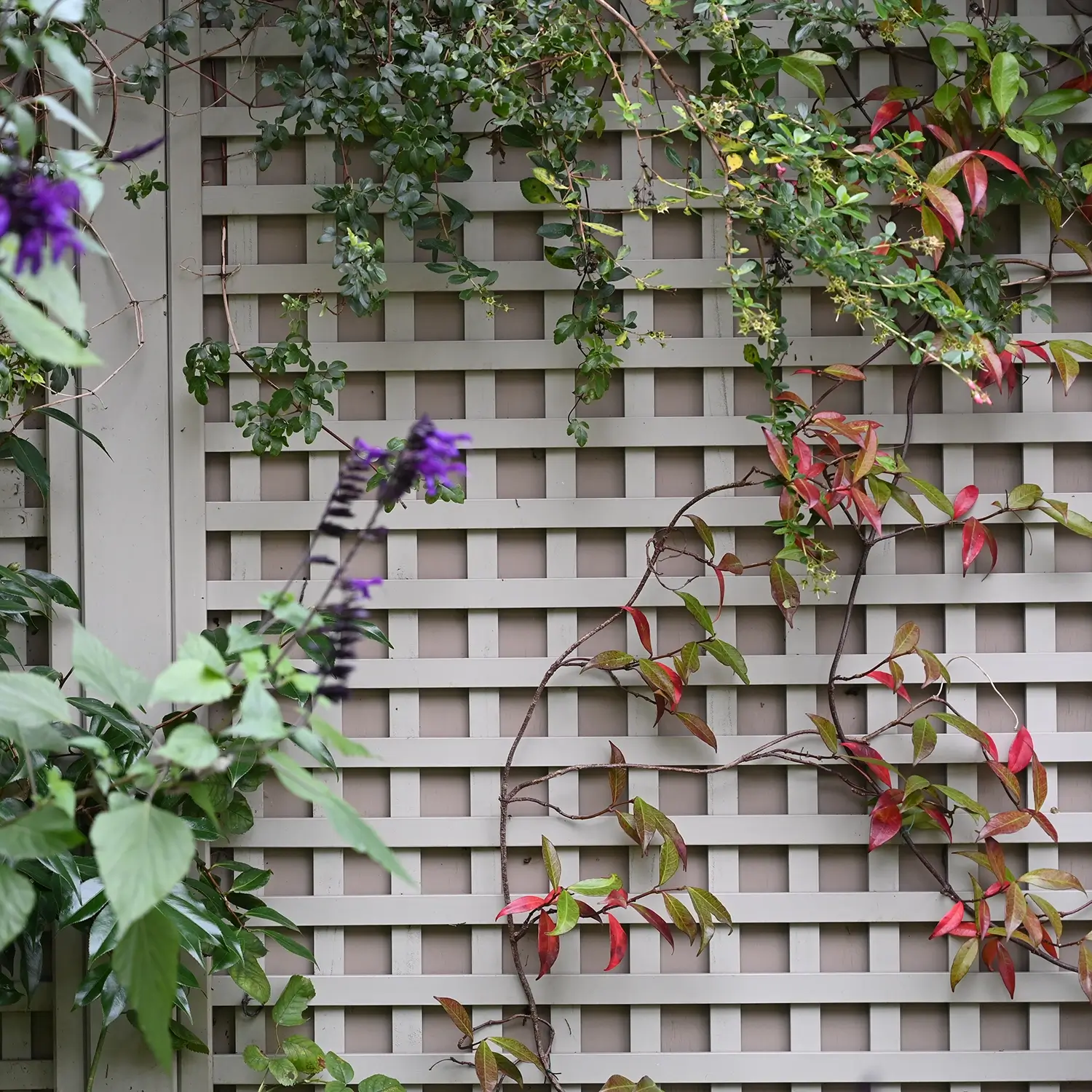
Boundaries are often the largest structural surfaces in a garden, and in winter they are on full view. Bare fencing can feel blunt once climbers have dropped their leaves, yet well-chosen trellis panels give a boundary pattern and texture of their own.
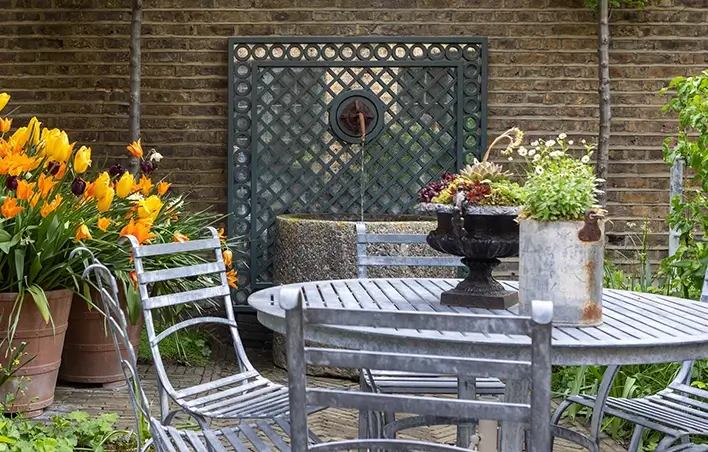
A square or diagonal grid reads beautifully when bare, and it continues to support the woody framework of roses, clematis and honeysuckle through the colder months. A band of trellis along a fence top adds height while softening hard lines, so the boundary feels sheltering rather than severe. For period properties, square trellis brings a formal, ordered character that suits heritage settings particularly well.

Slatted screens for calm, contemporary lines
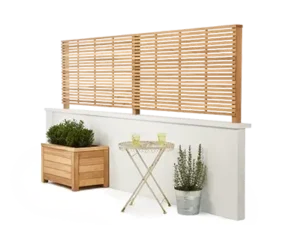
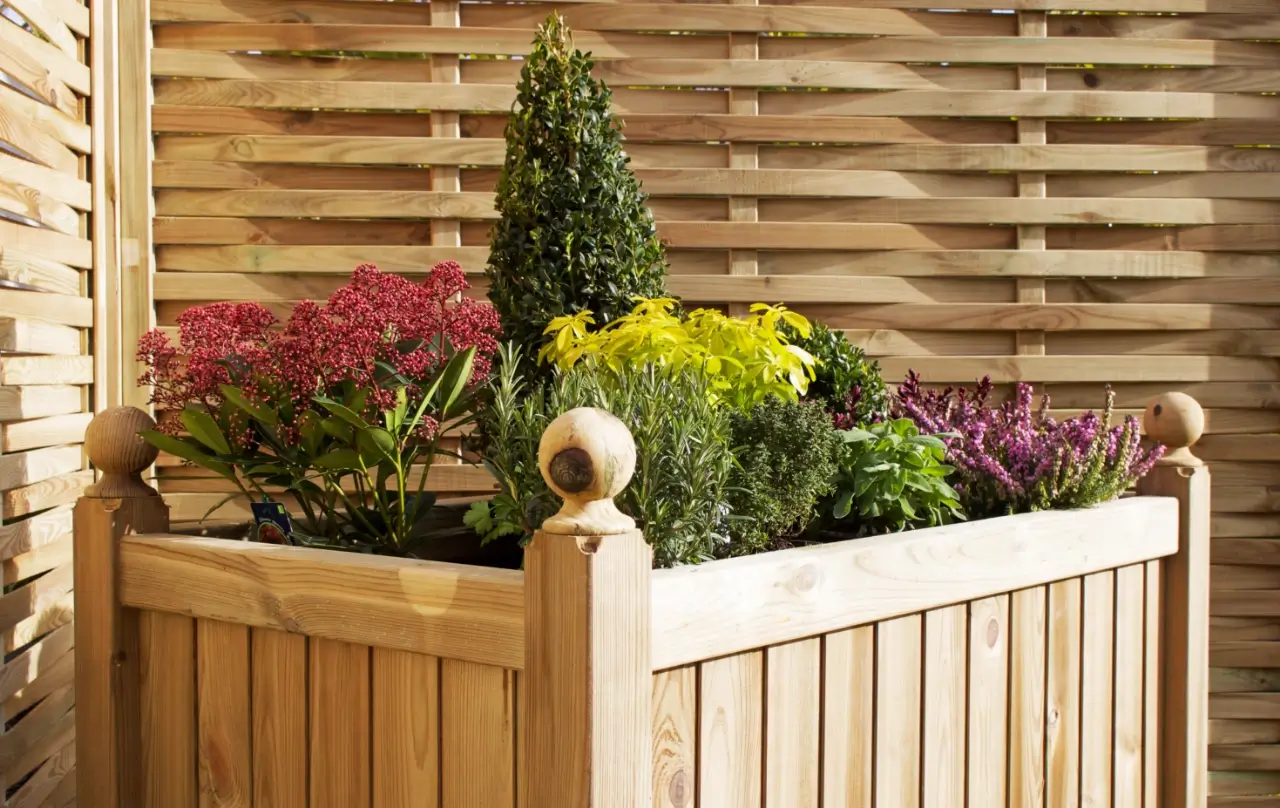
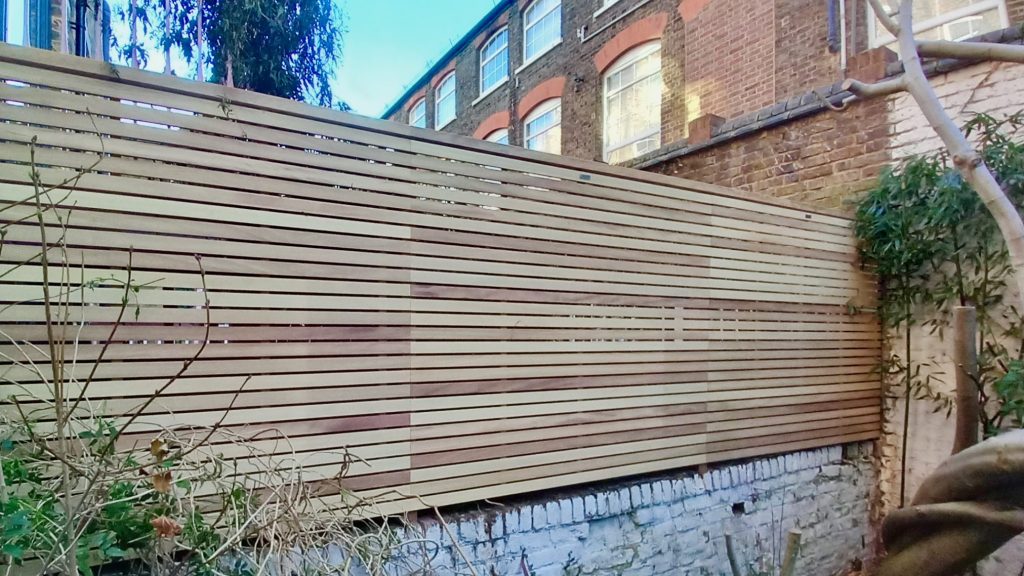
Where trellis brings pattern, slatted panels bring calm. Their crisp, repeated lines create a strong architectural backdrop that looks just as considered in January as it does in June. In contemporary gardens, they define seating areas and divide spaces without needing planting to finish them.
Slatted screens are particularly useful in smaller gardens, where every surface counts. Here are a few ways they help a garden hold its shape through winter:
- Screening utility areas so the eye settles on structure and evergreens
- Dividing a long, narrow plot into distinct garden rooms
- Creating a backdrop that sharpens the outline of grasses and topiary
- Adding privacy without the weight of a solid wall
Pergolas and obelisks for height and focus
Once herbaceous planting has been cut back, a garden can feel strangely flat. Vertical structure restores that missing dimension and gives the eye somewhere to rest.
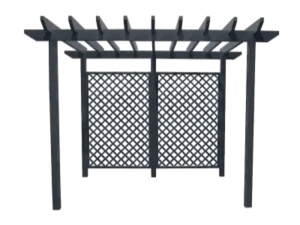
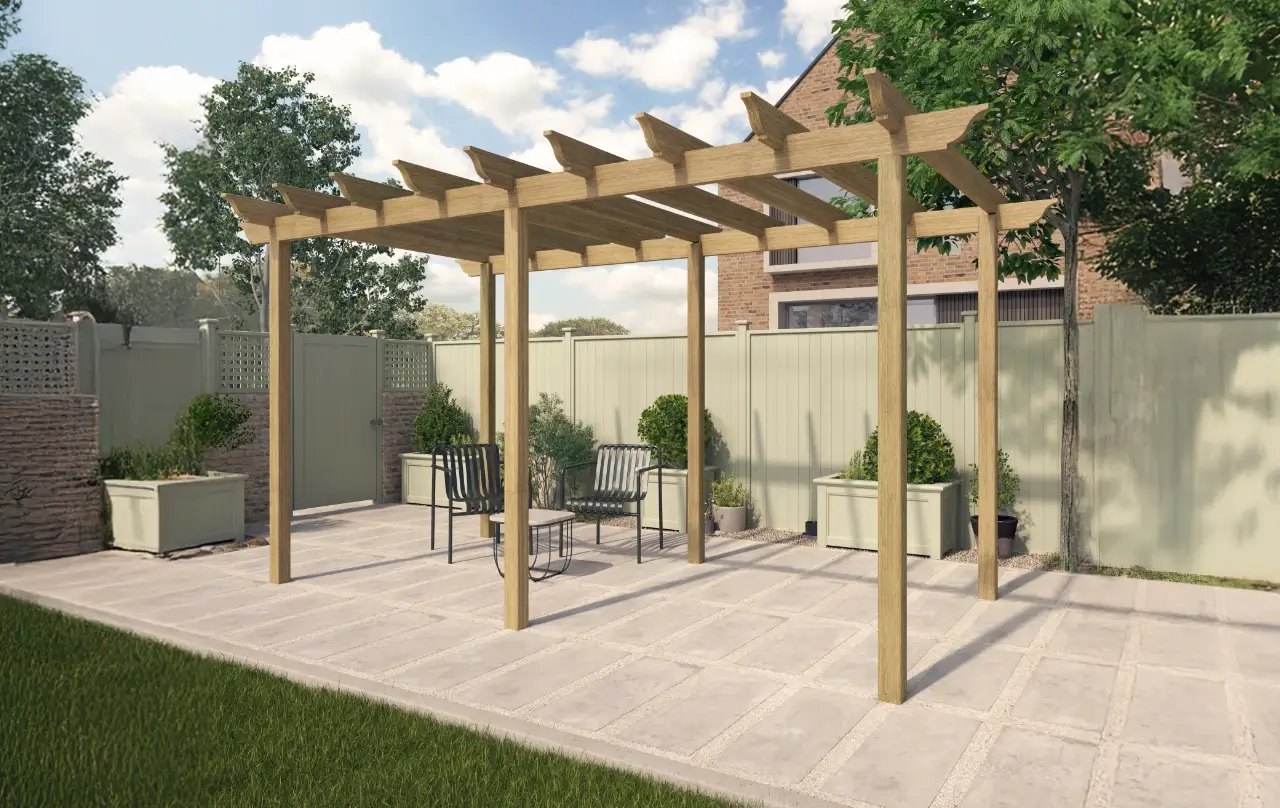
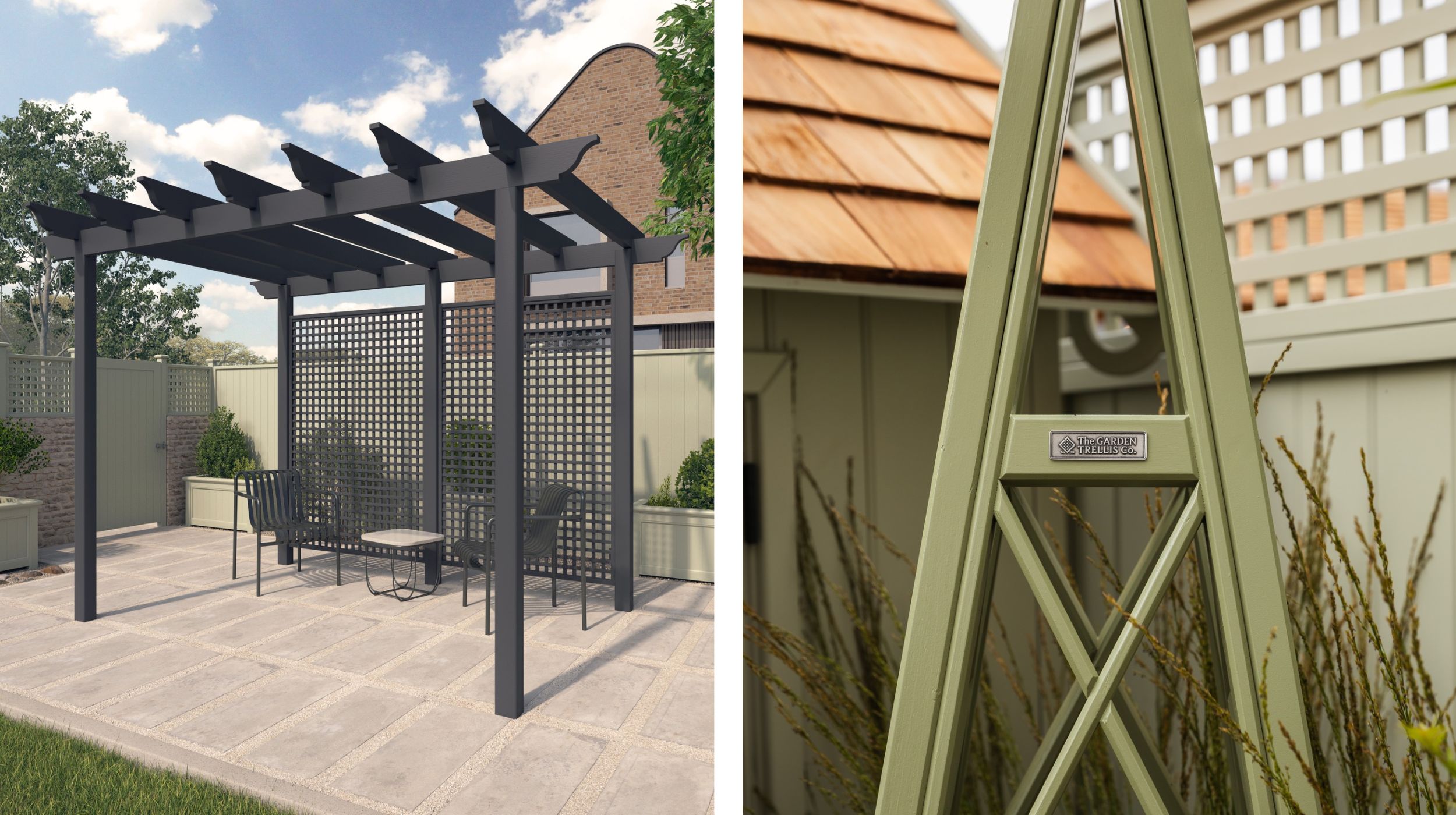
A pergola is perhaps the most generous structural piece in any garden. In summer it carries foliage and scent; in winter its posts and beams form an open, architectural frame that still defines a terrace or path. The shadows it casts in low sun add a subtle layer of pattern to paving and lawn.
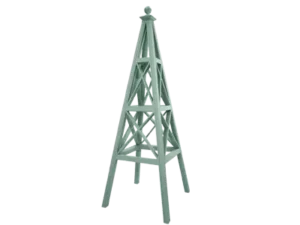
Obelisks work at a smaller scale, yet their effect in a winter border is considerable. A single obelisk creates a focal point, while a pair or a repeated line brings formal rhythm. Long after the sweet peas and climbing roses they supported have faded, they remain as strong vertical accents that anchor the planting around them.
Adding colour to winter garden structure
When flowers are absent, painted joinery can supply colour that lasts all year. A deep green sits comfortably against evergreens and bare branches, while softer heritage shades bring warmth to brick and stone. Choosing a finish for your structure is a way of giving the garden a consistent palette that does not depend on the season.
In smaller spaces, lighter colours are especially valuable. Pale shades reflect what little winter light there is, making a courtyard or narrow side return feel brighter and more open. When choosing a finish, it helps to keep a few principles in mind:
- Lighter tones such as cream and stone reflect light in small or shaded gardens
- Deep greens and charcoal recede, letting silhouette take the lead
- One colour repeated across several pieces creates calm and cohesion
- A contrasting accent can turn a single obelisk into a focal point
Our paint and stain range includes shades suited to both approaches, from the soft warmth of Orford Cream for period homes and compact courtyards to deeper, more grounding greens for larger plots.

Planning winter garden structure for the year ahead
November is an ideal time to assess structure, because you can see exactly where it is missing. Looking out from the house on a grey morning quickly reveals which areas feel resolved and which feel exposed. For a garden that holds together through every season, consider these steps:
- Start with the boundary – trellis panels give fences pattern and support all year round
- Divide with slatted screens – clean lines create garden rooms and calm backdrops
- Frame with a pergola – an open canopy defines a terrace or path even when bare
- Punctuate with obelisks – vertical accents restore height to cut-back borders
- Finish with colour – painted joinery carries a palette through the dormant months
A garden that looks good in winter is rarely an accident. It is the result of structure chosen with care, placed with intent and allowed to do its quiet work while planting rests. With that framework in place, spring planting becomes the finishing layer on a garden that already feels settled.
If you are ready to give your garden a stronger winter outline, browse The Garden Trellis Company’s collections of trellis panels, slatted panels, pergolas, obelisks and our paint and stain range for design-led pieces that look as considered in November as they do in June. Our team is always happy to advise on the right structure for your space.