
As October settles in, the garden begins to quieten. Borders are cut back, pots are tucked closer to the house and the last mild afternoons feel worth savouring. It is also the moment when the timber around you, from fencing and trellis to gates and posts, is about to face its longest test of the year.
Thoughtful garden timber winter care is not about rushing out with a brush the moment the leaves fall. It is about understanding what the coming months will ask of your joinery, and giving it the right protection while the weather still allows. A little attention now keeps structures looking settled and cared for when spring returns.
Let us explore why timber needs protecting, how painted and natural finishes differ, and which details deserve a closer look before the wet months arrive.
Why garden timber needs winter care
The amount of care garden timer requires depends largely on the type of timber and the treatment process that it has undergone. Standard pressure treated softwood tends to respond to its surroundings. It takes on moisture in damp weather and releases it again as conditions dry, swelling and shrinking a little each time. Over a British winter, that cycle repeats again and again.
Our Thermally Treated Timber options tend to require the least maintenance as the chemical free heat and steam treatment process makes the timber very stable. It also holds paint well, meaning it doesn’t need to be repainted so frequently. This makes it an excellent material for garden structures like trellis, sheds, and garden gates. Iroko and Western Red Cedar (when above ground) also have excellent longevity and stability.
That said, here are a few of the pressures your garden structures may face between now and March:
- Persistent moisture from rain, mist and saturated ground
- Frost, which can work its way into damp timber and open fine cracks
- Low winter sun, which still carries enough UV to fade and grey unprotected surfaces
- Wind, which drives rain sideways into joints and exposed faces
None of these is dramatic on its own. Together, across several months, they are what turn a crisp boundary into one that can look tired before its time.
Timing your garden timber protection
Most exterior paints and stains need dry timber and mild air to bond and cure well. By November, those conditions become rare in much of the UK, with shorter days, heavier dew and temperatures that often stay low well into the morning.
That makes October the last sensible window for protective work. A run of dry, mild days gives a finish the chance to settle before the weather turns, rather than sitting soft and vulnerable on the surface. If the timber is already damp through, it is often wiser to wait for a better spell, or to plan the work for spring, than to seal moisture in.
Painted finishes: colour and protection together
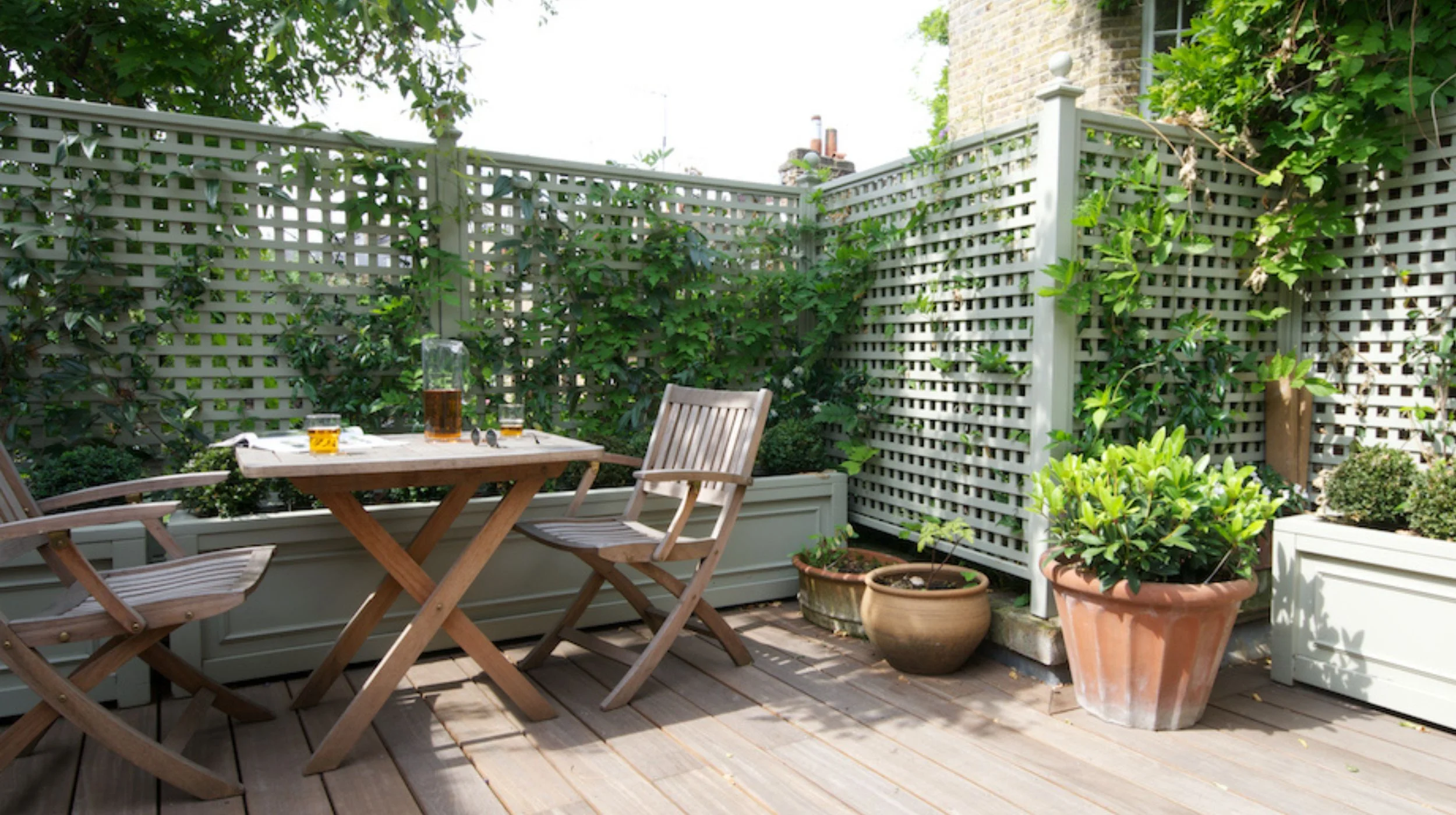
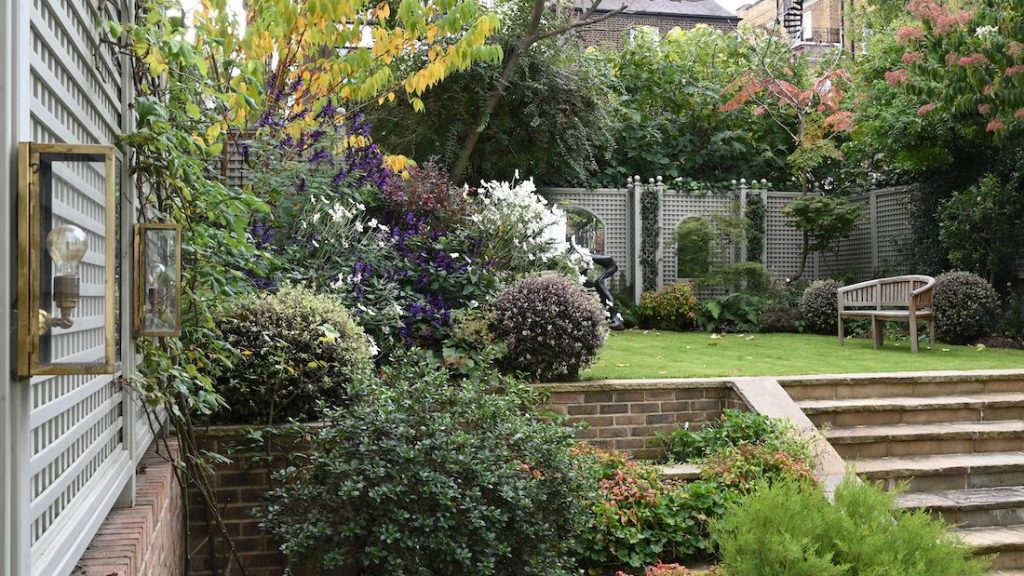
A painted finish works as a protective layer and a design decision at the same time. A good quality garden joinery paint helps timber shed water, slows the effects of UV and keeps structures looking crisp through the grey months, when colour in the garden is at a premium.
It also gives you a chance to refine the mood of your space. A deep shade such as Greenwich Green lets planting and winter stems stand out, while softer tones like Orford Cream suit period properties and cottage boundaries. Contemporary gardens often sit well with a muted grey or charcoal. The full paint and stain range spans heritage greens, warm neutrals and darker architectural shades.
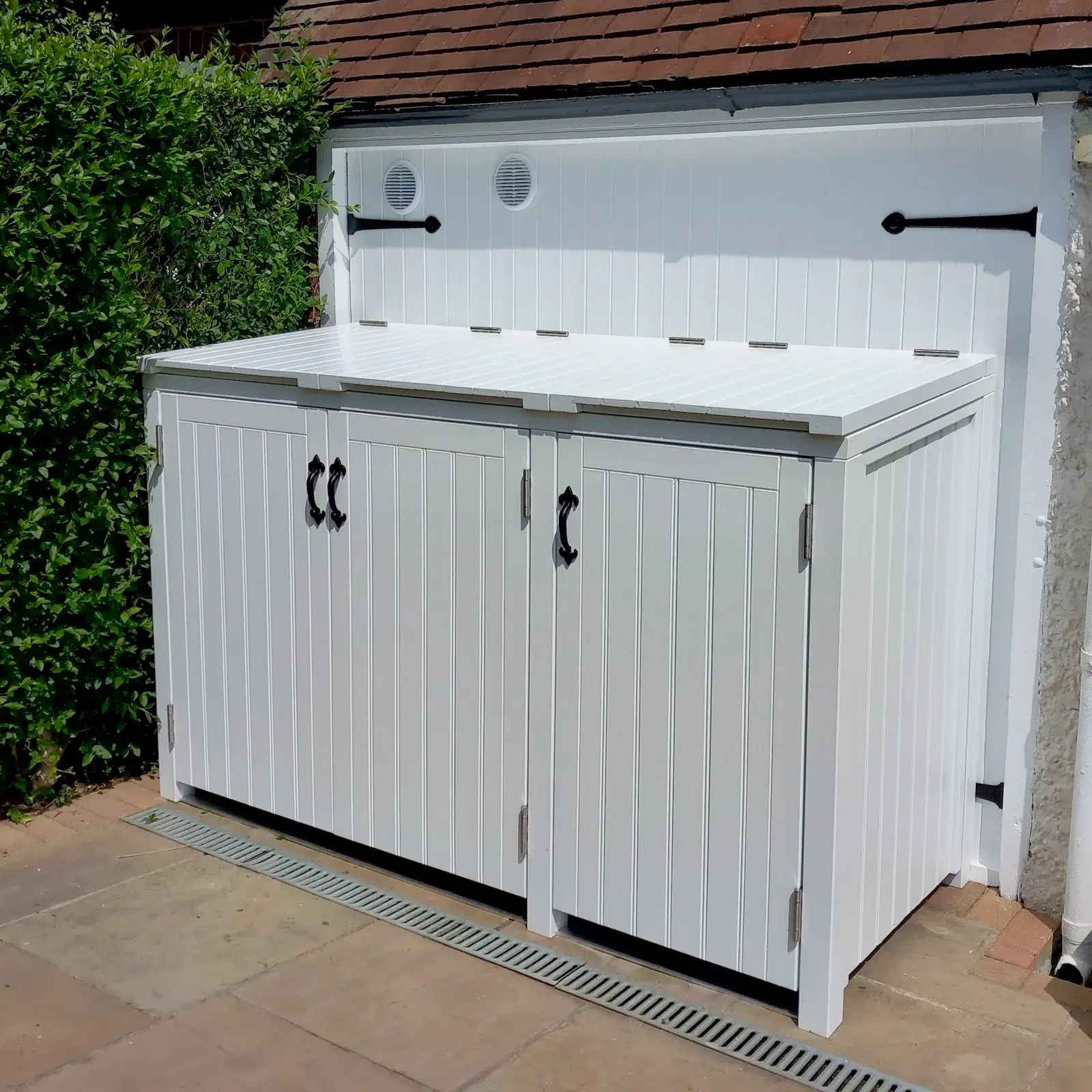
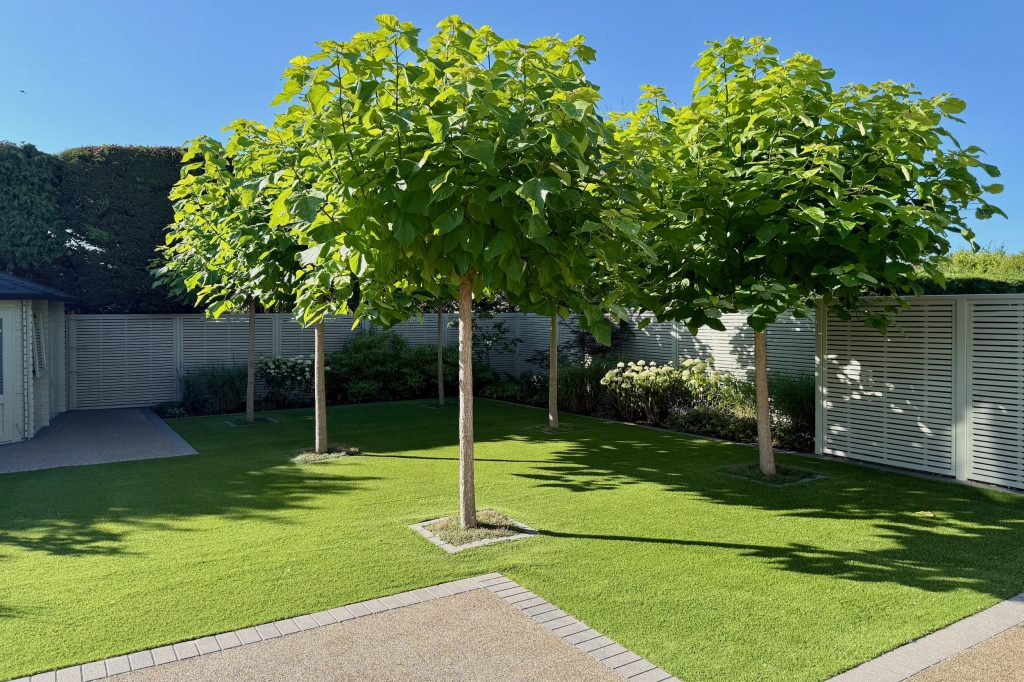
The photo below shows Framed Slatted Panels which we installed five years ago in seaside location. They have been re-painted every year and still look like new:
Painted timber does ask for a little ongoing attention:
- A refresh every few years, depending on how exposed the structure is
- An eye on chips and scuffs, particularly on gates and well-used edges
- A dry, mild spell whenever the finish needs renewing
Choosing a colour is far easier in person. Paint can look quite different on a screen than it does against your own brickwork, hedging and winter light. Ordering a colour sample lets you see our selection of popular garden paint colours in place before committing, which is especially helpful when you are painting a long run of fencing or several structures at once.
Naturally weathered timber and what it asks of you
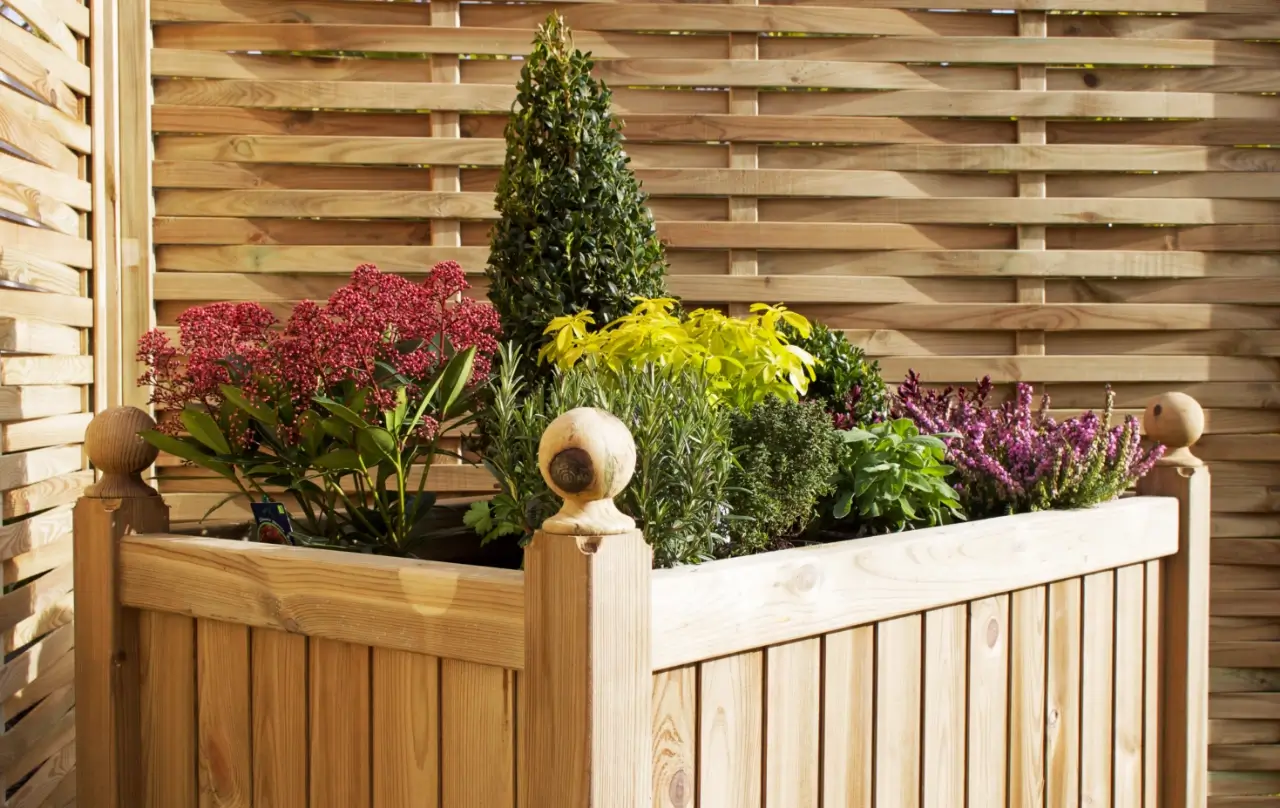
Not every garden wants painted joinery. Many people love the way untreated timber softens to a silvery grey over time, settling into planting in a way that feels quietly established. In rural and naturalistic gardens, that patina can be the most fitting finish of all.
Choosing a natural finish is not the same as choosing no care, however. Weathered timber still benefits from good airflow, clear ground at its base and an occasional look for areas that stay persistently damp. For example, leaves and soil banked against fence panels hold moisture exactly where timber is most vulnerable.
The difference is one of emphasis. Painted timber asks you to look after a surface, while naturally weathered timber asks you to look after its surroundings.
The vulnerable points worth watching this winter
Garden timber rarely wears evenly across its whole surface. It tends to show its age first at a handful of predictable points, where water lingers longest or enters most easily. Knowing where these are makes any winter walk around the garden far more useful.
Post tops
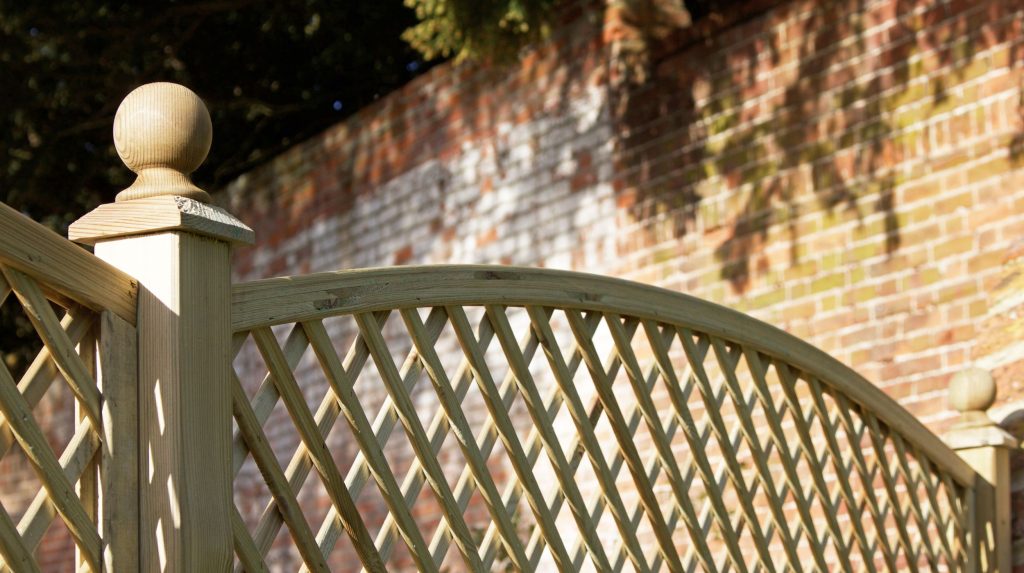
Flat or uncovered post tops collect rainwater and allow it to soak down into the grain. This is why well-chosen posts and cappings matter more than they first appear. A capping sheds water away from the post while giving the whole structure a neat, finished line.
Finials are often thought of as purely ornamental, yet they do a quietly practical job. They shield the most exposed points of a structure from rain while giving fences, posts and trellis a polished, considered finish.
End grain
Wherever timber has been cut, the exposed end grain draws moisture in far more readily than the face of the board. Panel edges, rail ends and the base of posts are the places to keep an eye on through the wetter months.
Joints and fixings
Joints are where two pieces of timber meet, and where water can sit unseen. Seasonal movement can also loosen fixings slightly over time, so it is worth noticing any gaps, staining or rattling on gates and trellis panels before winter weather exaggerates them.
We’ve been designing timber products for gardens for over 30 years, and have incorporated protective elements into many of our designs, for example, our Prestige and bespoke garden gates have slanted tops, so that rain water doesn’t sit on them.
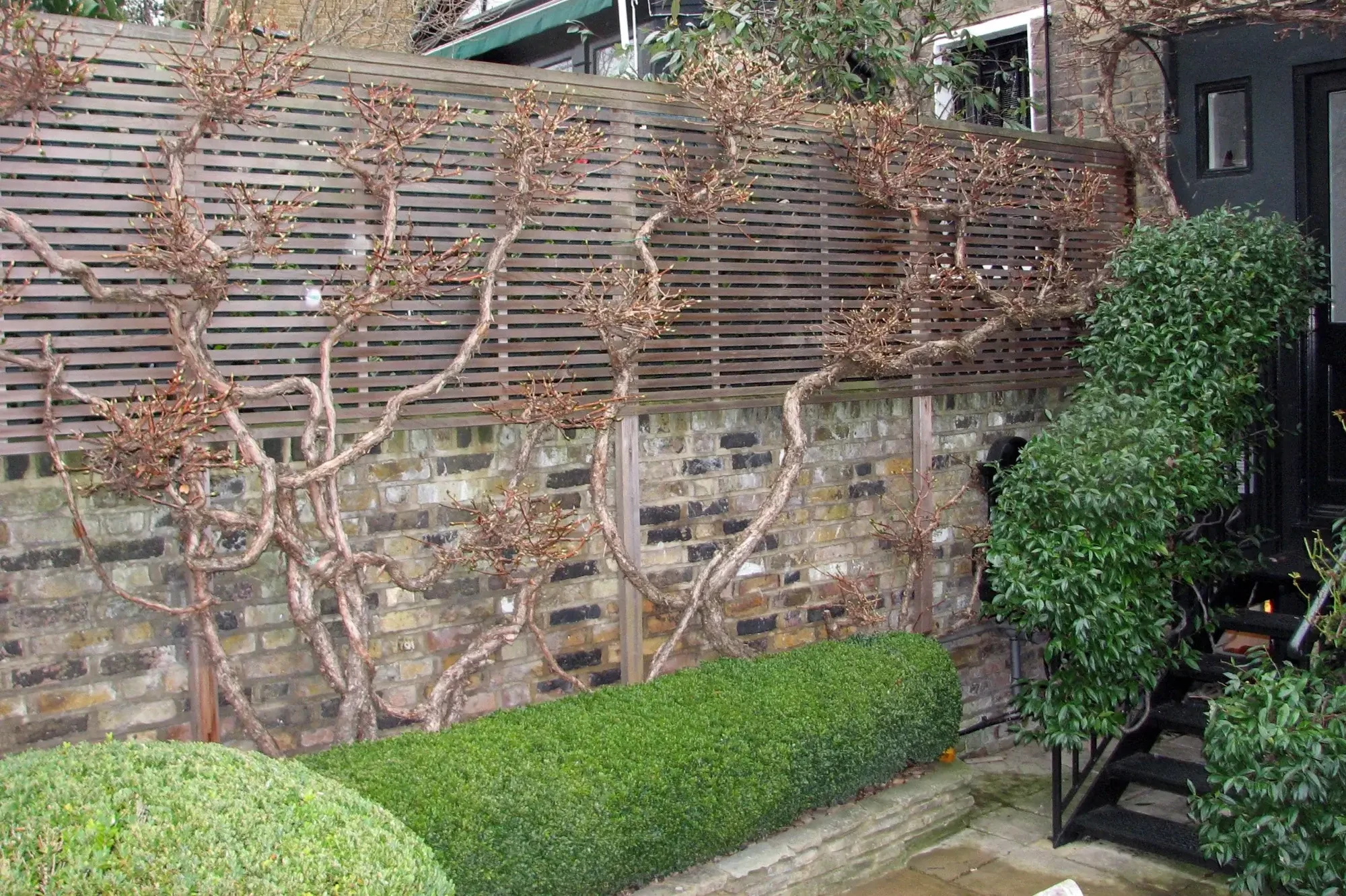
Bringing your garden timber winter care together
Good garden timber winter care is less about one big job and more about a few thoughtful decisions made at the right time. Here is how the pieces fit together:
- Choose your finish: paint for colour and a protective surface, or natural weathering for a softer, rustic character
- Order a colour sample to see shades in your own light before committing to a full scheme
- Check posts and cappings so water runs away from the most exposed tops
- Walk the line of your fence panels and clear banked leaves, soil and persistent damp
Winter has a way of revealing which parts of a garden have been looked after. A little care in October means your boundaries and structures can greet the spring looking settled, cohesive and ready for the season ahead.
If you are planning a refresh before the weather turns, explore the paint and stain range, order a colour sample, or browse our posts and cappings, finials and cappings and fence panels to give your garden joinery the protection it deserves. Our team is always happy to advise on finishes and details for your outdoor space.