As the leaves come down and the borders thin out, the front of the house steps back into view. On darker evenings, walking home along the pavement, it is often the gate you notice first: the latch under your hand, the way it swings, the line it draws between the street and your own front door.
Good front garden gate ideas begin with a simple observation. The gate is the first part of your home that anyone touches, and it sets expectations long before the front door does. Chosen with care, it gives a front garden proportion, character and a quiet sense of welcome.
Let us explore how to choose a gate that feels right for your house, your street and the way you live.
Why the front garden gate matters more than it seems
Front gardens are rarely places we linger. They are places we pass through, which is exactly why the gate carries so much weight. It is seen every day by you, your neighbours and everyone who walks by, and it quietly shapes how the whole frontage reads.
This is not a matter of choosing the most decorative gate on offer. It is about choosing the one that belongs. A gate that suits the house looks as though it has always been there, while one that fights the architecture is noticed for the wrong reasons.
A well-chosen front gate can:
- Frame the approach to the front door
- Signal the character of the house before it is fully seen
- Give a low wall, hedge or fence a clear and intentional entrance
- Keep children and pets safely in without making the garden feel closed off

Getting the proportions of a front gate right
Proportion is where most front gates succeed or fail. A beautifully made gate can still look awkward if it is too tall for its boundary or too wide for its path. Here are a few principles worth keeping in mind.
Height that follows the boundary
Front gates usually sit low, in line with the wall, hedge or fence on either side. When the top of the gate follows the same line as its boundary, the frontage feels calm and resolved. It is also worth checking local planning guidance before you choose, as gates beside a road are generally expected to stay around a metre high, and conservation areas may carry their own expectations.
Width that suits the path
A gate should feel generous enough for daily life, with room for bags, buggies and bins, yet in scale with the path beyond it. A gate much wider than the path it opens onto can look oversized, while a narrow gate in a broad frontage can feel slightly lost. For most front gardens, a single gate in proportion to the path is the most natural choice.
Openness and outlook
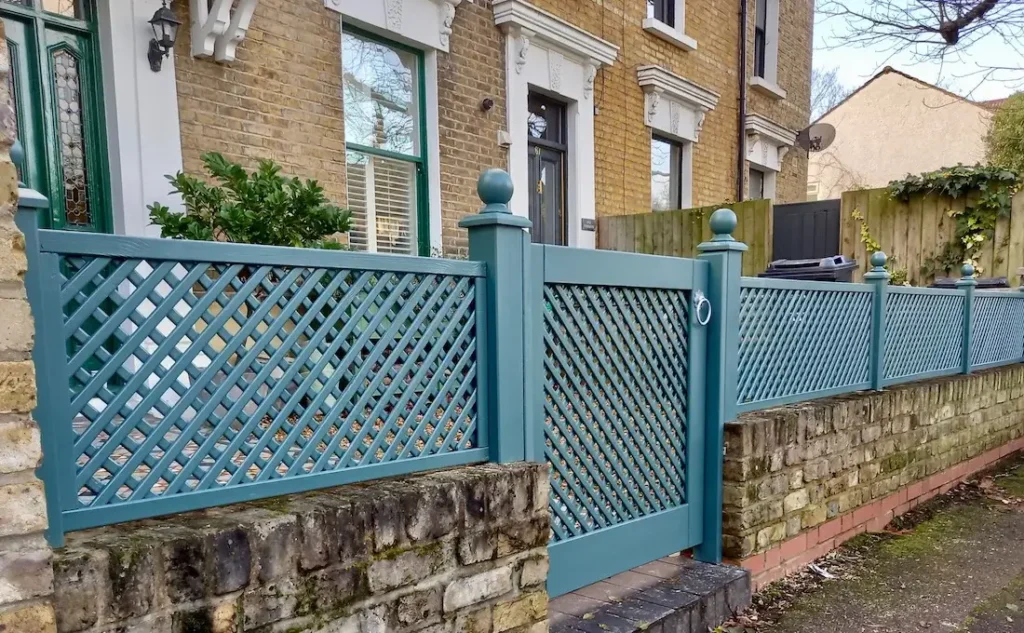
Open designs, such as picket or trellis gates, let light and views pass through, which keeps a small front garden feeling airy and connected to the street. Solid or close-boarded gates offer more enclosure, which can suit a busier road or a garden you want to keep a little more private.

Front garden gate ideas for period properties
Period homes tend to reward traditional garden gates with careful detailing. On a Victorian or Edwardian terrace, a painted picket gate with pointed or rounded tops sits comfortably alongside tiled paths, bay windows and low brick walls. For cottages, a softer rounded top and a rose climbing nearby can feel wonderfully settled.
Where the house has a little more presence, a more substantial design such as the Manor Gate gives the entrance a sense of formality without feeling grand. Pairing a gate with matching picket fencing extends the same rhythm along the boundary, so the gate reads as part of a considered whole rather than a standalone feature.
Details that suit period homes include:
- Painted finishes that pick up the colour of the front door or window frames
- Pointed or rounded picket tops that echo traditional railings
- A gate height that sits in line with a low wall or hedge
- Classic black ironmongery with traditional latches and hinges
Colour matters here too. Soft heritage greens, creams and deep classic shades tend to suit older brickwork, and our exterior paint range has been chosen with exactly these settings in mind.
Handpicked products
-
RHS Prestige Pointed Top Picket Gate
Price from £112.00 -



RHS Prestige Trellis Top with Solid Bottom Gate
Price from £1,111.00 -


RHS Prestige Solid Gate
Price from £715.00 -


RHS Prestige Diagonal Trellis Gate
Price from £546.00 -


Trellis Gate – Diagonal Trellis
Price from £299.00 -

Crofton Gate
Price from £88.00 -


Manor Gate
Price from £133.00 -
Rounded Top Picket Gate
Price from £48.00


Choosing wooden front gates for contemporary homes
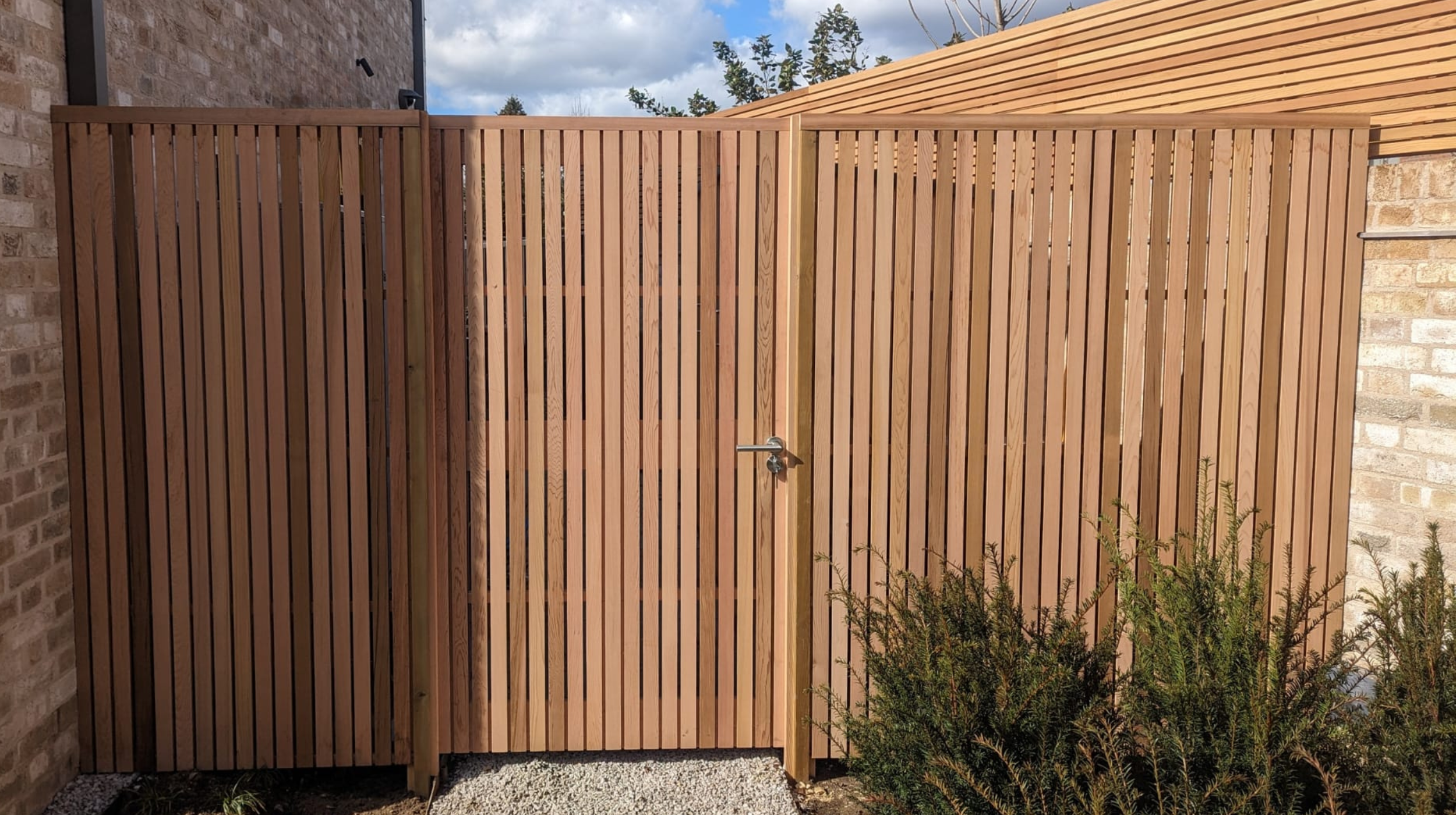
Contemporary homes call for a different kind of restraint. Clean horizontal lines, cladding and large areas of glass are best partnered by a gate with simple, linear detailing. A design such as the Slatted Gate echoes the rhythm of modern cladding and works particularly well alongside slatted panels elsewhere in the garden.
Finishes can be quietly confident. Some homeowners prefer timber left to silver gently over time, while others choose cool greys or charcoal to tie the gate into window frames and doors. Either way, wooden front gates bring a natural warmth that metal alone rarely achieves.
New build homes deserve a particular mention. Many sit on open-plan estates where front boundaries are kept deliberately low, and some deeds include covenants that limit what can be added. Where a gate is possible, a low, simple design can give the frontage definition without breaking the open feel of the street.
The quiet role of good ironmongery
Ironmongery is easy to overlook, yet it shapes how a gate feels every single day. The weight of a latch, the smoothness of a swing and the way a gate closes behind you all come down to the hinges and fittings chosen for it.
Good ironmongery also plays a large part in how a gate ages. Hinges sized properly for the gate help it hang true for years, rather than slowly dropping out of line. Finishes designed to resist rust keep their good looks through wet British winters, and a well-matched latch closes cleanly instead of rattling.
Style matters as much as function. Traditional ring latches and strap hinges suit period gates, while simpler, slimmer fittings (as pictured above) sit more comfortably on contemporary designs.

A tailored fit with Prestige and bespoke gates
Our Prestige gates are crafted with heavier sections and refined detailing, making them a natural choice for heritage properties or homeowners who see the front gate as a long-term investment.
Other openings simply do not suit a standard size. Older properties often have gateways that are slightly narrower, wider or out of square, and some homeowners want a gate that matches existing railings or a distinctive architectural feature. In these cases, bespoke gates can be made to the exact dimensions and style the space requires, so the finished entrance looks entirely at home.

Bringing the front garden together
The most successful frontages feel as though every element has been chosen with the others in mind.
- Start with the gate: choose a style that suits the age and character of the house
- Extend the line with fencing: matching trellis or picket fencing turns a gate into a complete boundary
- Finish with considered ironmongery: quality fittings shape how the gate feels and ages
- Unify with colour: a finish that echoes the front door ties house and garden together
Autumn is a good moment to look at your front garden with fresh eyes. With the summer growth cut back, the structure of the space is easier to see, and a well-chosen gate can carry it gracefully through winter and into spring.
If you would like to give your home a more welcoming first impression, browse our collections of garden gates, Prestige gates, picket fencing and ironmongery, or explore our bespoke gates service for an entrance made to measure. Our team is always happy to advise on the right gate for your home.